A Holistic Approach to Complementary Oncology
 Integrative and complementary oncology views severe systemic diseases, such as cancer, as the result of a functional failure of the body’s critical protective systems, particularly the immune system.
While traditional standard medicine aims to detect tumors early and remove them as soon as possible via surgery, chemotherapy, or radiation, this field of regenerative medicine focuses on restoring weakened defenses. A healthy immune system is capable of continuously destroying mutated cells before tumors can manifest.
Consequently, cancer is not viewed as a purely local problem that generalizes, but rather as a general problem that localizes. For this reason, strengthening the organism and organ functions has top priority. Therefore, our practice develops an individualized treatment plan that serves as a supportive pillar for patients in coordination with conventional medical procedures.
Hyperthermia for Cancer Treatment
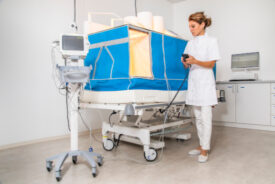
Hyperthermia forms the “fourth pillar” of cancer treatment. This involves targeted heating of tissue to temperatures between 40 and 43 °C (104 to 109.4 °F) as a biological booster for radiation, chemotherapy, or immunotherapy. Depending on the clinical picture, whole-body hyperthermia is used to stimulate the entire immune system, or local-regional hyperthermia is applied for targeted heating of specific tumor regions.
These thermal procedures directly damage the metabolic processes of cancer cells. Furthermore, they significantly sensitize tumor tissue to oncological treatments for prostate cancer, cervical cancer, skin cancer, breast cancer, as well as superficial soft tissue tumors.
Beyond oncology, this method achieves therapeutic success in chronic musculoskeletal problems (arthritis), soft tissue inflammation, and fibromyalgia. Another important area of application is the targeted activation of stem cells for the long-term regeneration of joint wear and tear.
This page serves the purpose of information only and is not to be understood as medical advice. We would like to expressly point out that a cure cannot be guaranteed.